Thursday, March 12, 2009

Day For Night (1973)

Director: François Truffaut
Country: France


First of all, sorry to all for not posting a little more often than I probably should. I've actually been quite occupied recently, particularly in exploring the ether of Japanese cinema on a number of fronts (including my other blogging commitment, the Toronto J-Film Pow-Wow). In any case, I'll try to make up for it and up the dosage of reviews over the next little while.

Now we get to one of my favorite films by one of my favorite directors: François Truffaut's Day For Night. Wonderfully showcasing Truffaut's trademark humanism, it follows a film crew as they face the day-to-day challenges of making a movie. Over the course of their shooting schedule, their various crises include a veteran actress who can't remember her lines (Valentina Cortese, who worked with Federico Fellini in Juliet of the Spirits, a fact that her character alludes to), various love affairs among the cast and crew, secretive actors and one reluctant kitten. Filling out the impressive cast are the stunning Jacqueline Bisset, Alexandra Stewart, Jean-Pierre Aumont, Truffaut stalwart Jean-Pierre Léaud and, most interestingly, Truffaut himself as none other than Ferrand, the director.

As is usually the case with Truffaut, Day For Night is filled with a variety of great little elements and sketches, patching together an entertaining and truth-infused imitation of life. Even as he reveals the tricks of the moviemaking trade, he keeps the people who live by it at the forefront of the film, bringing them to life as colorfully drawn individuals. In reference to a quote from Truffaut's longtime comrade and friend Jean-Luc Godard, just as the cinema isn't the station, but the train, the main concern of this movie isn't whether the film will be made, but instead how the film crew will make it - their journey as opposed to their destination. And what a journey it is, riddled with its share of crises and even grim moments, but nonetheless a joyful and satisfying one.

I revisited this film after finally giving Synecdoche, New York its much-deserved second viewing, and it's interesting how the two both compare and contrast. While both are about the process of making art (specifically, autobiographical art), Charlie Kaufman's wonderfully unique and mind-boggling film dwells in the agony and, it seems, futility of capturing an accurate representation of life in art, while in Truffaut's film, everyone just gets on with it, living their lives as they throw themselves into their work, all in a film that, as is usually the case, is chock-a-block full of details from Truffaut's own life and previous films. Like the camera which at one point turns to regard the audience (no doubt a nod to a similar moment in Godard's Contempt), Truffaut in turn flips his camera around onto himself to examine the craft that he has devoted his life to, making a funny and light-hearted salute to the cinema and the people who literally populate it (all while avoiding becoming bogged down in figuring out the various aspects and relationships of his life, unlike Philip Seymour Hoffman's character in Synecdoche). In a way, it stands as a key to better appreciating his own work. While it has never been as radical or daring or even as interesting (at least on a formal level) as that of Godard or Agnès Varda, that was never really the point. Instead, the point is the work itself; the film that weaves together an artificial world in front of your eyes. Most films are like magic tricks that are judged by their impressiveness or spectacular qualities; Truffaut's magic simply lies in the illusion itself that he and many others have, against all odds, managed to pull off time and time again - all for your viewing pleasure.


To cap off this review, I have two relevant add-ons. One is another picture I took of a film shoot I encountered in Paris during my trip to Europe last year which seems to embody the cinema of Truffaut - particularly in its depiction of three reoccurring elements in his work: cinema, children and the Eiffel Tower, which he often prominently featured. Note great little details like the various crew members captured in mid-action and the passing bus, both of which bringing to mind Day For Night's classic opening street sequence.


The other is this marvelous American Express commercial which was made by and stars Wes Anderson (featuring his buddies and regular actors Jason Schwartzman and Waris Ahluwalia). This is a neat homage to Day For Night, complete with the music that was actually used in the film ("Grande Chorale" by Georges Delerue) and the names François and Jean-Pierre - a great treat for Anderson and Truffaut fans alike!


Tuesday, February 17, 2009

Wings (1966)

Director: Larisa Shepitko
Country: Soviet Union

I discovered this great hidden gem after finally picking up the Eclipse set which features two works from the great, overlooked Soviet director Larisa Shepitko, whose life was tragically cut short by a car accident in 1979. Even though she left behind a legacy of only four feature films, the talent that she demonstrates in both Wings and the stunning The Ascent is enough to qualify her as one of the greatest female directors in world cinema.

Wings is a fascinating character study which features the renowned actress Maya Bulgakova as school headmistress Nadezhda Petrukhina. Living an at-times painfully mundane life in the confines of classrooms and hallways, she often recalls her former position as a courageous fighter pilot during World War II. As she daydreams of soaring amongst the clouds, you begin to share her desire for more exciting pursuits. As a buttoned-down official, she faces her share of challenges, most notably a delinquent student who constantly defies authority and faces expulsion from the school, but they are mere trifles compared to the all-too-sweet promise of exhilarating freedom that repeatedly haunts her throughout the film. There is even the strong possibility that she sees something of herself, or who she used to be, in the rebellious youth, which keeps her from dismissing his case entirely. Ultimately, her inner conflict invites a serious consideration of age, destiny and belonging, her case that of a passion having grown painfully out of reach.

Wings had a somewhat unexpected, delightful effect on me. Even though it is unquestionably a film bearing the unique vision of its maker, it also reminded me of several other European films that helped make up the worldwide boom in arthouse cinema during the 1960s, namely Federico Fellini's 8 1/2, Ingmar Bergman's Persona, Chris Marker's La Jetée and Agnès Varda's Cléo From 5 to 7. There was just something about the poetic, semi-documentarian way in which Shepitko shot her scenes and actors, capturing the natural hubub of everyday life, combined with the bold, innovative confidence in her style that reminded me of the great advances narrative film was making during that legendary time (this video, featuring Martin Scorsese, someone who I could listen to talk about film all day, discussing Michelangelo Antonioni's L'Eclisse, has also been bouncing around in my brain recently; maybe it had something to do with the association). As a result, I've been revisiting a number of such films since (including 8 1/2, one of my all-time favorites), reminding me of how fruitful this period truly was for the cinematic medium. As a recent second viewing rewardingly confirmed for me, Wings is definitely a film made in the same spirit of creativity, certifying Shepitko's place alongside other Soviet New Wavers such as Andrei Tarkovsky (Andrei Rublev) and Mikhail Kalatozov (The Cranes Are Flying).

This is one film I'll definitely revisit often and cherish in my collection. Inspiring on multiple levels, Wings follows a woman's journey of self-discovery with great style, throwing in sights and sounds of everyday life and tasteful artistic flourishes. Both it and Shepitko easily warrant attention.

Friday, January 30, 2009

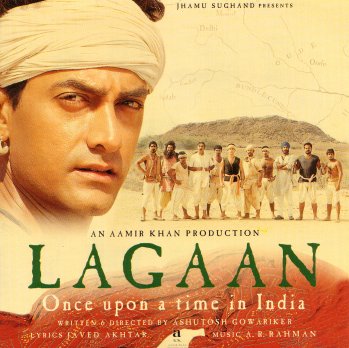
Lagaan: Once Upon a Time in India (2001)

Director: Ashutosh Gowariker
Country: India

It's only fitting that I follow up Slumdog Millionaire with a genuine Bollywood flick. This particular one was made fairly recently and gained much acclaim, most notably an Oscar nomination for Best Foreign Film and worldwide popularity. I chose to seek it out in the middle of a gloomy Canadian winter with hopes of raising my snow-bound spirits, and boy, did it do the trick. True to the ambitions of many a Bollywood picture, Lagaan is hugely entertaining on multiple levels.

The film is set in 1893, when the British still had a colonial presence in India. Its title refers to a grain tax that villages must pay towards the English. In the midst of a draught, a small village's prospects grow considerably darker after the arrogant Captain Andrew Russell (a villain perfectly designed to draw all manners of boos and hisses from the audience) doubles the Lagaan for seemingly no other reason than sheer malice towards the native population. Enter Bhuvan, a spirited young man (played by star Aamir Khan, who also produced the film) who takes up a challenge against the sneering officer for his people's good: a cricket match which, if won by the village, will excuse the entire province from Lagaan for three years; but if the British win, the Lagaan will be tripled.


I was delighted to notice that this film bears many similarities with another Asian epic: Seven Samurai. As in that film, a village facing a threat from forces of oppression must gather together a team of heroes in a short period of time to prepare, practice and mount a defensive force. Granted, Lagaan is set in India, centers around a cricket match rather than actual combat and throws in all sorts of extra ingredients like colonial politics and enthralling musical numbers, but nonetheless, the resemblances are there. As in Kurosawa's film, the story's structure allows plenty of time to be devoted to the numerous characters both within and outside the village as each side prepares themselves and the cricket match looms closer and closer. Plenty of subplots crop up, most prominent among them a love triangle between Bhuvan, Gauri (Gracy Singh), a village girl who harbors strong feelings for him, and Elizabeth (Rachel Shelley), the Captain's sister who decides to help the Indian team.

Lagaan could accurately be described as more focused and straight-forward than most other Bollywood epics. By sticking to the villagers' plight and their opposition to the colonial forces' tyranny, it maintains a fairly consistent tone and doesn't go overboard with too many outlandish elements. That said, it still contains its share of song and dance sequences, which I greatly enjoyed. The music was provided by none other than A.R. Rahman, who also composed the score for Slumdog Millionaire and is nominated for three Oscars for his work on that film (for Best Original Score and the songs "Jai Ho" and "O Saya"). Each song provided a nice break from the narrative flow while amplifying the characters' emotions at various points with hugely entertaining vivacity (though maybe it wasn't such a good idea to have Elizabeth join in for one song with her own, comparatively bland Western musical style).


Even though it clocks in at 3 hours and 45 minutes, Lagaan moves its story along at a steady pace, and not one minute of it felt wasted. This is probably as good a "crossover" flick into the vast realm of Bollywood cinema as you're likely to find, giving a good taste of authentic Indian screen entertainment in a highly accessible form. It certainly worked for me, and I'm looking forward to seeking out more of the delights that Bollywood has to offer. For those of you out there who are looking for something to tide you over until Slumdog comes out on DVD (or, at least, sweeps the Oscars, which I'm hoping it does), why not give this a try?

Thursday, January 15, 2009

Slumdog Millionaire (2008)

Director: Danny Boyle
Country: United Kingdom

We've come a long way from The River. Based on the novel by Rumer Godden, that film is a French-American co-production directed by Jean Renoir and set in India. It balances the coming of age story of a young girl in an English household by the banks of the Bengal river with documentary-like segments depicting the life and customs of the Indian people. Being Renoir's first color film, it is beautiful to look at and tries to provide an embracing, honest look at India, but it is still very much situated in a distinctly colonial perspective. As Satyajit Ray, who served as an assistant on the film and went on to become one of India's most renowned filmmakers, noted with disappointment, though the film was about and shot in India, only one of the principal players was Indian (played by the actress Radha). Honest and revealing though it may be, it only ever achieves a partial view of India. But like I said, we've come a long way from The River, and since that film, Western filmmakers have progressed considerably in their consideration of this magical country.

Recently, there has been a sort of resurgence of interest from Western filmmakers to make movies in and about India. Last year, we saw Wes Anderson's The Darjeeling Limited, which still carried his trademark style, but was nonetheless set in India (drawing influence not only from The River, but also the films of Ray himself). Shortly before the Mumbai attacks, Paul Schrader openly voiced his desire to go to India to make a film there. And then comes Slumdog Millionaire: the Danny Boyle-helmed Dickensian romance centered around a gameshow which just happened to take film festivals by storm, clean up at the Golden Globes and has a very strong chance of doing the same at this year's Academy Awards ceremony.

Tons have already been written about Slumdog in the interwebs and beyond, so I'll keep my own assessment of the movie short. Frankly, I loved it. The kinetic, stylish, madcap Danny Boyle who gave us Trainspotting is back, but in a whole new setting that oddly suits him. While his recognizable traits are present, he also makes the wise (and, as far as what I've heard about India, irresistable) choice to surrender to his surroundings. Unlike The River, or The Darjeeling Limited for that matter, he successfully captures the real, unfiltered India in his film, drinking in the many intoxicating sights and not shying away from the harsher ones, letting them all be captured by his cameras (which, according to this interview with Darren Aronofsky, sound like a guerilla filmmaker's wet dream) and contribute immeasurably to the story he is telling. In this film, India is very much an active participant in the story, helping shape the characters, growing and changing right along with them. Slumdog uses an old, tried-and-true story formula of a long, challenging quest for lost love, but its success is all about the way that story is told, and the captivating adrenaline rush that this film delivers is full proof of that. I can't wait to see it again.


Oh yeah, and this is my favorite to win Best Picture at the Oscars this year (even though it would be very cool if the Academy bestwed the award to a certain superhero flick).

Tuesday, December 30, 2008

Resolutions and What-Have-You

Hello all,

As promised, here is my final message to you before we head into 2009. This past year marked the start of this little blog of mine, and I'm glad to see that quite a few people from all over the world have tuned in to it (according to the nifty little world map in the right-hand column, anyways). This has been a very cool way for me to share my enthusiasm of world cinema with like-minded film buffs out there, and I hope everyone has enjoyed my reviews and gotten a few ideas for new films to discover.

Now, as for New Year's resolutions, I hope to plow ahead in more new (to me, at least) areas of world cinema. Here's a tally to see which countries have gotten some representation so far:

Canada: 2
France: 2
Germany: 1
Italy: 1
Mexico: 1
Romania: 1
Sweden: 1
U.K.: 1
U.S.A.: 1

As you can see, I've pretty much only "covered" Western Europe and the Americas so far. While I'm merely going with the flow and following what tickles my interest at any given time, I would genuinely like to venture into other national cinemas such as those of Africa, Asia, Australia and South America (although I also regularly contribute to the Toronto J-Film Pow-Wow, which focuses exclusively on Japanese cinema). Off the top of my head, I can see myself pursuing the well-received Tsotsi and reviewing it for the site before too long, with plenty of other films from those mentioned areas to follow.

So that's my resolution for this site, and I hope to follow through with it and make many new cinematic discoveries throughout the upcoming year. I wish everyone out there a very happy and healthy New Year's and 2009!

Friday, December 19, 2008

Fanny and Alexander (1982)

Director: Ingmar Bergman
Country: Sweden

While the holiday season is perhaps the most appropriate time to revisit Ingmar Bergman's masterpiece, any time of the year is a good one to see this enchanting piece of cinema - especially given its cyclical structure. And really, why wouldn't you make an excuse to see this embracing, beautifully-made work by one of the true masters of cinema?

At first, one may be daunted by the size of this film, be it the three-hour film version or the five-hour cut that originally aired on Swedish television (which is the one I've continually chosen to watch since I first saw it, and which this review specifically focuses on). On top of the running time, it is a rich, sprawling work that covers many subjects and themes - which is fitting, since it was much publicized as Bergman's last foray into filmmaking (although he made a small number of television projects since then and emerged from retirement one last time to make Saraband in 2003). It is certainly a fitting swan song to a body of work that has explored numerous aspects of humanity and mortality; life, death, identity, love, family, disease, time, art, memory and so much more have all appeared before Bergman's camera at one point or another, and Fanny and Alexander certainly serves as a summative reconsideration of such themes.

However, despite its size and scope, this film never feels overlong, pretentious or contrived. It is a very simple tale that unfolds at just the right place and never exceeds its status as such. Yes, it's a five-hour film, but it's exactly the length it needs to be in order for the story to unfold in the way it does. And truly, Fanny and Alexander is one of the great marvels of cinematic storytelling in terms of economy, style and substance. Bergman's material is extremely well-written, but what's even better is how he presents it, which is in such a way that you want to keep following his characters and see how they fare in the situations that arise in their lives. Essentially, the film is of the hallowed tradition of stories that plunge you into their worlds, where you want to keep exploring and living long after they have ended.

Fanny and Alexander are two young siblings living in turn-of-the-century Sweden with their prodigious bourgeois family, the Ekdahls. At the head of the clan is the matriarchal Helena, followed by her three sons: the boisterous, joyful old scoundrel Gustav Adolf, the moody, debt-laden Carl and the quiet, good-natured Oscar, director of the local theater and father to the two titular children. The entire first part of the film is dedicated to exposition as most of the film's main characters are introduced during the famous Ekdahl Christmas celebration. In it, we meet the children, the three brothers, their wives and Helena, but time is also given to smaller characters like the various servants of the household and the members of the theater company. During this long party sequence, there are so many fascinating dynamics between these characters as they interact with each other, creating several micro-narratives that play out within the Christmas sequence. The relationship between the servants and the higher-class family members alone is fascinating to observe as some of the older maids reveal the hidden bitterness that has come with several years of serving the Ekdahls. Scene by scene, we learn the habits and personality of each character, gradually coming to know what to expect from each of them for the rest of the night (and the film, for that matter). I would definitely call this one of the better depictions of Christmas in film simply for the multitude of emotions that arise - not only the positive, joyous ones (which are played up to death in nearly every Christmas movie, TV special and song out there), but also the more negative, pent-up ones that simmer all year (or, in the case of some characters, all their lives) before they are finally uncorked during the big family get-together. This kind of honesty is rare in holiday films, and rarer still in North American ones.

After Christmas, though, the main narrative thread really gets rolling, seeing Fanny and Alexander through a number of harrowing adventures after unfortunate circumstances force them to live under the oppressive rule of Bishop Vergerus, one of the most memorable villains to ever grace the screen. I don't want to reveal too much else about the film's plot, as part of what makes the film so enjoyable comes from seeing many of the characters who were so lovingly developed in the Christmas sequence face new and unexpected challenges throughout the rest of the film both as individuals and as the family unit that ties them together.

As I said before, Fanny and Alexander is essentially a good yarn; a fairy tale told in a beautifully rich yet extraordinarily simple way. There are wonderous elements to it such as magic and ghosts, but they are just as much fun as the various characters and settings that make up Bergman's world (special kudos go out to the Oscar winning costume designer Marik Vos, art director Anna Asp and set decorator Susanne Lingheim for helping create that world). Legendary cinematographer Sven Nykvist captures lush colors and shadowy realms in images that indulge the eyeballs and fire the imagination. There are funny little inconsistencies and odd, unexplainable moments that occassionally turn up, but you can't help but accept them as they happen, simply because a) the characters accept them (so why shouldn't you?), and b) you're already so immersed in the story that you just want to shut up the logical part of your brain and keep watching.

Fanny and Alexander is one of my all-time favorite films (as of this moment, it's certainly in my top 10), an opinion shared by my cousin Yves (who says it just might be his number one favorite) and countless others. Utterly enchanting, fantastically well made and packed with moving moments and strong emotion, it is one of the most rewarding film experiences you could hope to discover.


Plus, as a "happy holidays" sort of thing, here is a list of five of my favorite Christmas movies (or, to be more precise, arty movies that happen to take place around Christmas).

1) Fanny and Alexander (Ingmar Bergman, Sweden) - see above!

2) Mon Oncle Antoine (Claude Jutra, Canada) - Often touted as one of the greatest Canadian films ever made, this is kind-of the Great White North's equivalent to Fanny and Alexander - often dark, centered on a young boy's coming of age in an uncertain world and equally concerned with the forces of life, death and sex.

3) Eyes Wide Shut (Stanley Kubrick, United States of America) - Another fairy tale, this time set in a New York that never existed, as realized by another of cinema's great orchestrators. See if you can spot a Christmas tree in every setting!

4
) C.R.A.Z.Y. (Jean-Marc Vallée, Canada) - Come back to Canada with this stylish story of sexual discovery and sibling rivalry in Quebec through the 1960s, '70s and '80s. The film with the best soundtrack on this list.

5)
Brazil (Terry Gilliam, United Kingdom) - A little holiday cheer with terrorists, bombs, government incompetence, plumbing, conspiracy, more government incompetence and a giant computer chip-laden samurai thrown in for good measure.


Well, this has been a great start for this little blog of mine, a
nd I thank all readers around the world for tuning in. Until my last little blurb before the new year, I wish everyone a happy holiday season wherever you are. Cheers!

Monday, December 8, 2008

Dracula: Pages From a Virgin's Diary (2002)

Director: Guy Maddin
Country: Canada

With all of the recent hubub over Stephenie Meyer, her teen- and tween-based Twilight book series and the recently released Twilight movie, it's safe to say that vampires are "in" again. However, because of the Mormon author's drastic makeover of classic vampire lore (No fangs? Crosses don't work? Neither does sunlight? Or holy water? Or garlic?!), it's a strange time to be a fan of classic, Gothic vampire fiction - you know, the real stuff. Nosferatu, Bram Stoker, Carl Th. Dreyer's Vampyr - mention any of those crucial cultural keystones of vampire culture to a Twi-hard (as some of the Meyer fanatics like to call themselves), and you'd probably get a look as if broccoli had just sprouted out of your ears before she starts gushing about Edward Cullen all over again.

Fortunately, there's an alternative to this depressing picture: Canada's own Guy Maddin has a solid antidote ready with Dracula: Pages From a Virgin's Diary, a film that offers much comfort and contentment in the original way it re-tells Stoker's highly influential vampire story. Based on a Royal Winnipeg Ballet production by Mark Godden, the film unfolds in the silent film style of the 1920s and '30s that Maddin uses so often combined with choreographed dance sequences. It's a brave venture, but a well-executed and ultimately memorable one.

Right away, one can't help but be drawn into Maddin's scatterbrained imagination as it gives the classic Dracula tale a unique makeover. This is pretty evident in the film's opening, which focuses not on Jonathan Harker, as the book and most film adaptations do, but instead Lucy, best friend to Harker's fiancée, Mina. Even before she encounters the Count, she has to contend with three proud and slightly bufoonish suitors and her mother, who is encased in a glass coffin, incessantly rings a bell for her daughter and is connected to a huge, whirring ventilator. As closely as it follows the original story, this Dracula is filled with the kinds of phobias and quirks that Maddin continually returns to in his films, including a sense of terror and naive curiosity surrounding sex.

The splendid music and accompanying dance sequences add a new dimension of non-verbal storytelling for Maddin to play with and are quite enjoyable. It's true that one doesn't think of ballet right away when the words "Dracula" or "vampire" are mentioned, but here, it oddly suits the material quite well and gives a refreshing spin on the familiar story (not to mention that, considering the equally Gothic Phantom of the Opera and its legendary success on Broadway, perhaps it isn't such an unlikely match after all). The Gustav Mahler score is far more satisfying than the flat, tinny soundtracks usually put together for silent film DVD releases, and the ballet sequences beautifully illustrate such scenes as the suitors' courtship of Lucy, her nightmare in which winged gargoyles dance around her bed, Dracula's seduction of both her and Mina and Van Helsing's climactic quest to find and kill the vampire.

As part of his style, Maddin combines the exaggerated conventions of silent cinema with his own over-the-top sense of humor with great comedic results. When Dr. Van Helsing prescribes protection against the visiting vampyr, Lucy's maids and suitors surround her room and sleeping body with mounds of garlic. At one point, the insane asylum-bound Renfield (servant of Dracula and eater of bugs) chomps on a guard's arm and draws a mouthful of glistening black blood, eyes rolling madly as he does so. The quaint dialogue of silent cinema is amusingly reproduced in such chuckle-worthy lines as "The blood of a brave man is the best thing for a woman in trouble," and the essence of silent-era melodrama is reproduced in spades through the actors' bulging eyes and diverse array of facial expressions.

Maddin's Dracula is essentially a silent film itself, as it contains no audible dialogue, but it could never be mistaken for a film from Murnau or Dreyer. Like the works of those directors, Dracula mainly uses well-framed black-and-white photography mixed with some color filters, but unlike them, Maddin indulges in various other effects available to him, including Super 8 photography, sparsely-used sound effects and colored highlights within the monochrome images. In a way, this allows Maddin to have his cake and eat it too, giving him a means of continuing his love affair with silent film while making good use of more recent techniques.

As with most, if not all, of Maddin's films, Dracula: Pages From a Virgin's Diary is not for everyone. However, for fans of vampire fiction who are tired of the same old, uninspired re-hashings of the Dracula myth, this great little flick might be just the ticket you were looking for.

Friday, November 28, 2008

Sólo con tu pareja (1991)

Director: Alfonso Cuarón
Country: Mexico

Filmmaker Alfonso Cuarón last wowed audiences with 2006's visually impressive Children of Men. Before that, he filled out his filmography with a diverse selection of projects, including A Little Princess, Great Expectations, Y tu mamá también and Harry Potter and the Prisoner of Azkaban (which is, for my money, the best-made film in the franchise). His first film, Sólo con tu pareja (Love in the Time of Hysteria), is a hidden gem; a well-crafted sex comedy which showcases the talent that would unfurl into one of the most impressive directors to come out of Mexico in recent years (Cuarón is joined by his friends Alejandro González Iñárritu and Guillermo del Toro as the most well-known figures of this group).

Cuarón, with the help of cinematographer Emmanuel Lubezki, sets his story in a cool, green-tinted contemporary Mexico. The "hero" is Tomás Tomás, writer for an advertising agency, charming bastard and modern day Don Juan. He is played by Daniel Giménez Cacho with all the shameless charisma to be expected from a character like this (one could perhaps think of him as a Spanish, less repugnant Tucker Max). The film chronicles a series of his amorous adventures and, just maybe, a major turning point for Tomás.

Despite its sometimes grim content (including an AIDS-related scare and plenty of suicide threats), there is never a moment when you forget you're watching a comedy - and a damned funny one at that. The film was written by Cuarón and his brother, Carlos Cuarón, who make sure the humor gains momentum in the right places and never lets up for too long, and they craft some absolutely priceless and zany situations that Tomás continually gets himself into. Perhaps the best one uses the classic setup in which the protagonist must be in two places at once, forcing Tomás to shuffle from one apartment to another on a precariously small ledge outside his apartment building. While doing this, juggling two women at the same time, he suddenly lays eyes on yet another one through a window - the stunning airline stewardess Clarisa (Claudia Ramírez). From that point onwards, Tomás declares himself a changed man; one who (according to him, whatever that's worth) is feeling true love for the first time. His awkward meetings with and attempts to win over Clarisa are further complicated by a former lover's (Dobrina Liubomirova) plan to exact a little payback. The film's English title is indeed an apt one, as Tomás consequently becomes consumed with hysteria-laced despair, setting in motion yet another chain of hilarious events throughout the film's final act.

Sólo con tu pareja is chock full of several entertaining ingredients that help make it such an engaging film. Tomás' best friend, a doctor by the name of Mateo Mateos (Luis de Icaza), provides plenty of comedic padding and shares many great small scenes with Tomás. A few times in the film, Tomás engages in a morning ritual that seems to reinforce his hare-brained egocentricity: a sprint down to his apartment's ground floor to fetch the paper - clad only in a pair of green running shoes. At moments when he seems most frustrated or desperate, he obsessively arranges little cone-shaped paper cups around his apartment. It is a delight to behold a character so fully fleshed out and bearing all these behavioral quirks, and it is a tribute to Cacho's acting talent and the Cuaróns' strong writing that Tomás is, in spite of his chauvinistic habits, so damned likeable. To top it off, Cuarón uses the music of Mozart to set just the right tone for his film, providing a calm and often poetic effect to balance the chaotic proceedings.

This one was another of those films that I was meaning to see for the longest time, but simply couldn't for one reason or another. I was thrilled when it became the next film in my Zip (the Canadian equivalent to Netflix) account to be sent to me, and after finally seeing it, I decided it was well worth both the wait and a mention on this site. I heartily recommend it and can't wait to add it to my DVD library.

Monday, November 17, 2008

The Tracey Fragments (2007)

Director: Bruce McDonald
Country: Canada

This next film comes from my home country, Canada, and it makes me rather proud. The Tracey Fragments is truly Canadian not just in terms of origin, but also because it perfectly represents the unique, unconventional tendency that is inherent in our national cinema from the experimental works of partners Michael Snow and Joyce Wieland to the tales of "the new flesh" from David Cronenberg to the eccentric delights of Winnipeg-born mad scientist Guy Maddin (of course, there are plenty of films of ours out there that bear the embarrassing signs of having tried to imitate the formula or style of Hollywood films - the fact that these films are often not very good should be taken as a sign that Canadian film is better off doing its own thing instead of following in its Southern neighbor's footsteps). And what's more, this is a film worthy of celebration not just because it is different, but also because it is a brilliant, beautiful piece of work which owes a significant amount of its success to its uniqueness. In other words, it conducts a completely successful marriage of style and substance (as opposed to using style for its own sake), producing a totally distinct and powerful artistic experience. I honestly, truly believe that The Tracey Fragments is one of the most original cinematic expressions to come in a long time and just as much of a revelation in film form as Breathless.


The linear storyline of this non-linear film is as follows: teenager Tracey Berkowitz (played by Ellen Page at the height of her acting talent thus far) is stuck in an unhappy life. Her parents are distanced and emotionally unstable, and she is constantly tormented at school. To top it off, she has hypnotized her little brother Sonny into thinking he's a dog. One day, Sonny goes missing, and Tracey sets off through the urban landscape (the film was shot in Toronto and Hamilton) to find him, encountering a variety of characters and coming to terms with her past, decisions and feelings in the process.

This would be decent enough material for a "normal" film, but what sets The Tracey Fragments apart from the pack is its use of multiple frames on the screen almost entirely throughout its duration, allowing the filmmakers a greater degree of creativity in depicting Tracey's emotional and mental states and viewers some choice in how they watch the film (i.e. which frames to concentrate on at any given moment). The film was shot on digital cameras in two weeks, but apparently took nine months to edit. However, if the emotional punch that the film packs is any indication, the time spent was well worth it. In addition to the multi-framing device, The Tracey Fragments employs eloquently-written monologues from Tracey delivered through voice-over and direct address to the camera that provide searing, revealing insight into the young protagonist and her thoughts and feelings surrounding the people she knows and meets and situations she experiences. Though it tells a story, The Tracey Fragments first and foremost immerses the viewer into its main character in a way that has never quite been accomplished in film before.

In a way, The Tracey Fragments can be seen as a worthy successor to David Lynch's 2006 film INLAND EMPIRE. It too was shot on digital cameras and focuses on the psychology of a female protagonist, but it is often quite murky and too strange for its own good - even for viewers expecting the typical strangeness of its eccentric director. Still, that film was a brave and admirable first step in a new direction in filmmaking possibilities, and The Tracey Fragments makes the next logical step forward with a great deal more effectiveness.

To see this film is to open one's mind to the possibilities of the cinematic art form and be swept up in a beautiful, lyrical work of art. Through the power of its lead performance and the ingenuity and strategy of its editing structure, The Tracey Fragments brings its title character to life with an unparalleled potency. For those who have ever been curious about the possibilities of cinematic experimentation or the still new and strange world of digital cinema, those who can't get enough of Ellen Page or who are curious to see if she can go beyond the spunky, likeable characters she plays in Juno and Smart People, or those who simply seek a profound, poetic movie-going experience, I have only three words for you: see this film.

Saturday, November 1, 2008

Coming Soon

Hello readers! I've safely returned from my month-long trip through England and (mainly) France, and it was awesome. I'm currently working on cleaning up a few of the 1,400 or so photos that I took throughout my journey and getting them up on the blog, so hang in there; lots of tasty pics are on the way.

Friday, September 26, 2008

Au revoir pour maintenant...

Hello, readers! Even though it seems like this blog has only just gotten up and running at a fair pace, it'll be put on hold for about a month, as I'm taking off on a trip to England and France tonight! It goes without saying that I'm pretty pumped right now, not to mention antsy and frantic in my efforts to pack everything I think I'll need for a month. I'll be visiting lots of cinema-centric places along my journey (particularly in Paris), and I'll be taking loads of pictures and writing lots as I go.

I'll be coming back in late October, and soon thereafter, I'll be back to my regular cycle of viewings and corresponding reviews - but not until I've savored as much of my trip as I can! And even then, I'll very possibly still be in a French state of mind, so don't be surprised if I stick to more French films for the first few reviews after my return. I know that contradicts my one "rule" about this blog - no two films in a row from the same country - but then again, it's my blog, and over it, I am king (or power-hungry, corrupt dictator, if you prefer)!

So, until next month, take care and happy viewing!

P.S. If you know any like-minded cinema fans out there, spread the word about this little blog of mine, and be sure to let them know about the other reviews that I've written so far (listed below).

Sunday, September 14, 2008

La Pointe courte (1956)

Director: Agnès Varda
Country: France

This year's Toronto International Film Festival was particularly special for me, as I got the chance to see one of my favorite filmmakers and a legend of the French New Wave (a period in film history which I'm particularly crazy about): Agnès Varda. At 80 years old, she is still very active in filmmaking, having just presented her newest film, Les Plages d'Agnes, at the festival. For the event I attended, she presented her debut feature, La Pointe courte, which has been credited as one of the first films to ignite the filmmaking trend that would result in the French New Wave, and stuck around afterwards for an on-stage conversation with Canadian scholar and filmmaker Brenda Longfellow (Our Marilyn). The event took place at the AGO's Jackman Hall.

First the film itself, which Varda gave a short introduction for before sitting down to watch it with us. La Pointe courte, which takes place in the fishing community of the film's title, tells not one story, but two. The first involves an unnamed man and woman whose marriage is falling apart. As they stay in and explore the village, where the man grew up, they discuss their feelings for one another and what they should do regarding their relationship. The second narrative strand, which I found to be far more interesting, focuses on the various inhabitants of the village (who were virtually playing themselves). These segments have a very documentary-like feel to them, serving mainly to capture the essence of everyday life in the village. Among the assortment of "characters" who regularly appear throughout the film include a large family with several children, a daughter and her overprotective father and the man who is jailed for three days by the health inspectors who visit the village and examine its fishermen. The integration of these documentary segments with the staged storyline of the couple was particularly reminiscent of Jean Renoir's The River (1951), which similarly intercuts scenes from the Indian community on the banks of the Bengal River in which his film is set amid the coming-of-age story of three young women.

In this film (one of many cases that Varda would make for style over substance throughout her career), story is undeniably trumped by atmosphere and visual beauty. Varda's prior experience as a photographer is particularly strong throughout La pointe courte, and many of the film's shots have a still-life quality invested in them. For the village, Varda allows her camera to capture its character not only through the real-life fishermen and their families, but through the everyday objects and tools that are littered throughout the coastal town: laundry flapping on clotheslines, abandoned boats scattered along the shore, heaps of nets and rope, the many cats that silently prowl through the streets and buildings. Varda also allows herself some visually impressive shots within the couple's storyline, including, most memorably, some shots of the actors' faces in profile that seem to anticipate Ingmar Bergman's Persona:

After the film, Varda and Brenda Longfellow were seated on stage and mainly discussed the film and Varda's experiences making it. Here are some of the points that were discussed:

-As she has often done in interviews surrounding her involvement in the New Wave, Varda insisted that she was virtually a newcomer to cinema when she made La Pointe courte. While she described the Cahiers crowd (including François Truffaut and Jean-Luc Godard) as young men who wore out the seats of their pants watching films at the Cinematheque, she had instead visited museums and read books throughout her youth and had not seen more than 20 films when she started making the film.

-Because of her inexperience in filmmaking, she came up with her own terminology when shooting La Pointe courte, coming up with names for shots such as "face shots" (instead of close-ups) and "Egyptian shots" (for wider shots that included more of the actors' bodies).

-Varda's editor for the film was none other than Alan Resnais, who would go on to make his own mark as a director with such films as Hiroshima, Mon Amour, Muriel and Last Year at Marienbad and taught Varda a great deal in their collaboration. For example, Varda had mainly shot what she envisioned the final film to look like - that is, each shot was taken from one particular angle that she had decided on. Resnais, upon viewing the footage in the editing room, advised her to allow herself a wider variety of shots to choose from for her films in the future.

-Though La Pointe courte strongly resembes Italian neorealist films such as De Sica's Bicycle Thieves and Visconti's The Earth Trembles, Varda claimed to have never heard of the Italian neorealists when Resnais pointed out her film's similarities to them, and when he recommended that she see some of their films at the Cinematheque, she had to ask him for directions there, as she also had no idea where it was located in Paris at that time.

-When someone asked her whether she preferred black-and-white or color, Varda basically replied that it would depend on the project. She described her use of color in such films as Le Bonheur as Impressionistic, and said that she would have only shot La Pointe courte in black-and-white (a logical statement to make, as many of the film's gorgeous images seem ideally suited for it).

It was both an honor and a special treat to be able to attend this event and see one of my filmmaking heroes up close. It was nice to see that she had lots of spirit and a great sense of humor during the dialogue, and I hope she continues to enjoy many more years making films and expressing herself creatively. Vive Varda!

Tuesday, September 9, 2008

The Wrestler (2008)

Director: Darren Aronofsky
Country: United States of America

Hello, all. This one comes straight from the Toronto International Film Festival, where it was just picked up by Fox Searchlight. It has been garnering tons of good reviews and won the much-coveted Golden Lion at this year's Venice Film Festival - all deservedly so. Director Aronofsky (whose previous films are Pi, Requiem For a Dream and The Fountain) trades in the impressive stylistic flourishes of those films for a more threadbare, straightforward approach, which is a fitting choice for this film's material.

As so many other reviews of the film will tell you, The Wrestler is about Randy "The Ram" Robinson, a washed-up superstar of the 1980s wrestling scene. Mickey Rourke's performance as Randy is nothing short of impressive as he ably channels the fatigue, nostalgia, sadness and loneliness of this tired, rusted engine of a man. Throughout the film, he attempts to come to terms with such challenges as his deteriorating health, the increasingly brutal fights that he partakes in, getting enough of an income to live off of and, most importantly, his relationships with Cassidy, an ageing stripper played by Marisa Tomei, and his estranged daughter Stephanie, played by Evan Rachel Wood.

In Raging Bull fashion, The Wrestler focuses on Randy's life both in and out of the ring, though with substantially less domestic violence and stylistic excess than Scorsese's epic. Though not nearly as rough as the notorious Requiem, there are still traces of that film in this one, and I'd say those two films are the most alike in Aronofsky's diverse body of work so far. Like it, The Wrestler is steeped in gritty realism and has an almost mundane sense of everyday familiarity to it (particularly in the many extras who populate the film ranging from neighborhood kids to Randy's boss and customers at the grocery store where he works to the assortment of fans who attend his matches). Also, The Wrestler has a few remaining traces of Requiem's searing showcase of the ugly, often surreal capability of cruelty and humiliation that human beings often wield, here portrayed most overtly in (but not limited to) the brutal matches that Randy partakes in.

For the screening I attended, Aronofsky actually showed up to briefly introduce the film - a pleasant surprise for me, who was only expecting the movie. He made a few remarks about how well the film has been doing so far, and made a point of saying that this was really a small movie for him and therefore he wanted to lower the lofty expectations that might have been surrounding it. Finally, he spoke about how great it was to work with Mickey Rourke and concluded with a wise piece of advice that certainly applied to his experience of making The Wrestler: "When you have a great performance and a lens, that's all you really need." Full proof of that statement's truth shows in every frame of Rourke's performance. Let's hope this brings him the recognition he deserves for it.

Wednesday, September 3, 2008

Cleo From 5 to 7 (1962)

Director: Agnès Varda
Country: France

This is a particularly special entry for this still-young blog. Not only is it the first featured film from France (a country with a ridiculously rich cinematic heritage) and the first film from the French New Wave, but it is also a much-loved favorite of mine which, like Fellini's 8 1/2, helped introduce me to the wonders and delights of the European art cinema of the 1960s. Cléo was actually chosen as a prime example of the European art film for my 2nd year Film History class in an essay question which asked me to analyze the film and write about its historical significance. I had been meaning to see it before that assignment, but the resulting essay was a wonderful way of discovering this sparkling gem of French cinema, and I've been a strong fan of it and Varda ever since.


While Cléo From 5 to 7 quite ably stands on its own as a great film, something should be said about the unique situation of its author. Agnès Varda is widely known as the "godmother" or "grandmother" of the French New Wave and was one of the few women (and certainly the best-known one) who successfully infiltrated the boy's club of the French New Wave group, which of course included the Cahiers du Cinema comrades François Truffaut, Jean-Luc Godard, Chaude Chabrol, Eric Rohmer and Jacques Rivette. However, she stands somewhat apart from them in a few ways. She is more specifically associated with the Left Bank group of filmmakers who arrived onto the French film scene during the New Wave. They weren't as cinema-crazy as the Cahiers group, instead drawing from other art forms such as painting and photography (Varda herself was a photographer before making her first film, La Pointe courte). Along with Varda, the other main Left Bank figures are Alain Resnais (Hiroshima, Mon Amour, Muriel, Last Year at Marienbad) and Chris Marker (La Jetee).

Just from looking at their films, it's clear that these filmmakers have a quality about them that sets them apart from the other New Wave brats: a tendency to think outside of the box and use cinema for truly original, even experimental exercises. Resnais' Hiroshima, Mon Amour and Marienbad have been highly praised as landmarks in cinematic grammar, as has Marker's La Jetee, which famously uses still photography to tell its story to great effect. Cléo From 5 to 7 also uses film form in a unique way: by closely following its protagonist, the eponymous pop singer Cléo (Corinne Marchand) in real time for an hour and a half as she journeys to different parts of Paris and meets various people. This is a creative way for the audience to become familiar with its at-first self-centered protagonist (who is awaiting the results of a medical test for cancer) and to see the city of Paris from its streets, taxis, buses, cafes, parks and a plethora of other perspectives, making the film just as much a delightful ode to flanerie as it is a fascinatingly made character study.

While Varda certainly has her differences from the Truffaut-Godard group, Cléo is most definitely a New Wave film. Like Breathless and The 400 Blows, it showcases both the city of Paris and its actors in striking black-and-white compositions (though the opening credit sequence, which focuses on a tarot card reading, is partially shot in color, contributing yet another stylistic oddity of the film). There is also the same strong sense of camraderie in it as in other New Wave films: Jean-Luc Godard, Anna Karina and Eddie Constantine all show up for cameos at one point, and the famed French composer Michel Legrand (who provided memorable scores for A Woman is a Woman, Band of Outsiders and The Umbrellas of Cherbourg as well as Cléo) is given a fairly substantial role as one of Cléo's collaborators. Indeed, this film is a most worthy entry in the new Wave canon, and easily fits alongside other cinematic masterworks from the period such as Vivre Sa Vie, Jules and Jim or any of the other films previously mentioned.

This year, Varda will be visiting the Toronto International Film Festival to present her new documentary, Les Plages d'Agnès, and speak about La Pointe courte, her first film (made in 1954), which many consider a key starting point for the French New Wave. I'll be going to the screening of the latter film, and I simply can't wait to see both it and the remarkable artist behind it in person.

Also, I'll be taking a trip to France in a little less than a month (my first time there, and I can't wait), and among the many cinematic pilgrimages that I plan to make (most of the classic French film locations I want to visit come from Amelie and Breathless), I hope to follow in Cléo's footsteps and retrace her route through the city as seen in this film. That, along with seeing Varda at TIFF, is a dream come true for any fan of the French New Wave or Varda.

In closing, this is a wonderful film that comes highly recommended from a longtime fan who fell in love with it at first sight; here's hoping the same happens for you.

Friday, August 29, 2008

And The Ship Sails On (1983)

Director: Federico Fellini
Country: Italy

I'm feeling kind of nostalgic these days. This is probably because, for the first time since I can remember, I'm not getting ready for the big trip back to school like nearly everyone else around me. So, it's somewhat fitting for me to next write about a film by Federico Fellini, who a) is a master of depicting memories and nostalgia on film, and b) I first discovered in my first year at U of T (via the wonderful 8 1/2, which kept pleasantly cropping up in various classes throughout my later years of study and is still one of my favorite films). And The Ship Sailed On is one of Il Maestro's later efforts, and you can tell that this film is echoing a style that has already been constructed and perfected through his previous masterpieces.

This film is very much exemplary of the kind of work Fellini produced in the later half of his career. While these films were filled with eye-popping visual compositions and massive amounts of imagination, they just didn't have the same sense of emotional involvement or intimacy that his earlier films did. As Satyajit Ray once explained (paraphrased here), this late-career Fellini was still very admirable and inspirational, but only as a cinematic technician.

As with other late Fellini films, there are no real main characters to really grow attatched to. Instead, the film follows a strange (and, I have to admit, often downright creepy) assortment of passengers who are gathered on an ocean liner to scatter the ashes of Edmea Tetua, a famous opera singer, off the coast of the island Erino. They mainly consist of other prominent opera singers, pretentious intellectual types and the plump, medal-laden Grand Duke of Herzog and his entourage. As in Fellini's Amarcord, the audience is given a polite, well-meaning guide who frequently takes time to contribute his commentary on whatever is happening at the given moment. All of these curious people are amusing to behold; just don't expect to be given an intimate emotional profile or strong connection to any of them during the film. To many viewers, they will only appear as a bunch of goofy kooks and only remain as such until the final title card. Those seeking more well-written and sympathetic main characters will be more than rewarded by some of Fellini's earlier efforts such as La Strada, Nights of Cabiria and 8 1/2.


Of course, the artificial nature of the film is made obvious by the fact that Fellini shot it almost entirely on the soundstages of Cinecitta studios, as was also his regular practice throughout the later stages of his career. There's definitely a certain artistry to the ways in which Fellini would replicate settings and special effects in this way; everything has a unique, theatrical look to it. The sea is a rolling, twinkling blue canopy suspending immobile lifeboats. A warship that appears late in the film is a massive iron fortress with stiff black clouds perpetually surrounding its smokestacks (both it and the ocean liner are obviously models). The film's artifice is even directly revealed at the end of the film in a segment that shows us the machinery and crew within the Cinecitta studio behind all the fantasy. It's a move not too dissimilar from a magician suddenly revealing the secret of his famous optical illusion, but with Fellini, the magic doesn't come from being fooled, but instead from the effort and craftsmanship that went into his tricks.

And The Ship Sailed On, again, like Amarcord, has a fairly straightforward, episodic structure to it. Along with the ocean liner guests, the viewer is treated to a variety of spectacles along the voyage, including:

- A concert given entirely via water glasses.

- A singing contest between the various sopranos within the ship's furnace, showcasing not only the range of their voices, but also the cavernous insides of their mouths.

- A giant rhinoceros who is diagnosed as suffering from lovesickness.

- The surprise arrival of a group of Serbian refugees who occupy part of the ship's deck and give a musical performance of their own (and eventually attract the attention of the mentioned battleship).

All of these episodes and more show that Fellini may have gradually changed his filmmaking methods as his career progressed, but his imagination lost none of its wild inventiveness.

Throughout the film, the ship's guests constantly tell stories and anecdotes, very much giving the impression that their lives, albeit fictional, extend so much more beyond what Fellini gives us, which is a small, fleeting glimpse; a mere portion of the whole. Perhaps this is why his later films have been seen as more distant and unapproachable - in his earlier films, his main characters had well-written, fully-realized arcs that consisted of highly significant (if not the most significant) events in their lives. The sightseers of Amarcord and And The Ship Sailed On, on the other hand, go from episode to episode existing only as such, merely along for the ride with the rest of the audience, undaunted by emotional crises and moral dilemmas. In terms of film viewing, this method of storytelling is an acquired taste (when I first saw it, I didn't really think much of the carnivalesque Amarcord, but I'm gradually warming up to it bit by bit), but those who try hard enough or let themselves should certainly be able to take their share of pleasure away from it.

Though it's not one of Il Maestro's greatest films, And The Ship Sailed On is still a highly enjoyable ride through the weird and wacky world of his mind, and certainly worth checking out at least for long-time Fellini fans. More casual viewers can take their chances, but would most likely benefit from warming up to some of his other films first; La Strada, La Dolce Vita or 8 1/2 would all be good places to start.

P.S. Something should probably be said about the music in this film. Sadly, Fellini was unable to work with his regular collaborator, the legendary Nino Rota, due to his death a few years previous. However, he made do with a smattering of well-known classical music, including Strauss' Blue "2001" Danube Waltz and a personal favorite of mine, Claude Debussy's Claire de Lune. Though it's a sort of "greatest hits" collection, it is nonetheless used fairly well throughout the film.

Sunday, August 24, 2008

Schultze Gets the Blues (2003)

Director: Michael Schorr
Country: Germany

This great little film was recommended to me by fellow Toronto J-Film Pow-Wow contributor Bob Turnbull, whose own film blog, Eternal Sunshine of the Logical Mind, can be found here. It tells the simple story of a plump, gentle-natured man named Schultze who, after retiring from his job as a miner in his small German town, gradually takes up the fast-paced Zydeco style of music (originating from the American south) on his accordion, leading him on a journey far from home.

The movie is extremely simplistic in design and tells its story at its own steady pace - not unlike Schultze himself. The film's main strength lies in all the little details of character and everyday life that lie scattered throughout its frames, just waiting for the viewer to pick up on. It's not out to shove a great, lofty message down people's throats; it just follows Schultze on his travels (eventually finding him navigating through the waters of Louisiana) and invites you to come along. As with all proper adventures, he meets a wide variety of people and learns more about himself as a person than he ever would have back in his home town.

Horst Krause gives a wonderful, subtle performance as the child-like Schultze who doesn't talk too often, yet says so much about his character with the way he quietly takes in a given situation or politely lifts his hat to strangers (more often than not, he reminded me of a German Monsieur Hulot). As Bob reminisced, a particularly great scene is when Schultze first comes across Zydeco music on his radio. To simply watch Schultze react to this strange, new kind of music is a treat in and of itself, and the film is filled with these sorts of scenes: ones that mainly focus on new encounters and the ways that people (both Schultze and others) react to them. The results are often humorous and almost always quite touching.


The main message I got from this film is how important it is to have some sort of purpose in your life. The first part of the movie after Schultze retires shows him trying to cope with the quiet, empty life that lies ahead of him. He hangs out with his two best friends and drinks beer. He rides his bike through the town and rings his bell at the railway crossing guard who always takes too long raising the gate. He tends to his garden gnomes. He remains relatively inactive while the world seems to pass him by (best exemplified by the many trains that speed past Schultze and his friends). I really identified with these parts of the film as I myself am currently in a similar spot in my life, having just graduated from university (I know - pretty much the opposite of retirement, but still, both achievements are important milestones that signify the end of a life's chapter, not to mention the ambiguous, question mark-filled void more commonly known as the future which comes afterwards) and spent a positively bland and fairly uneventful summer doing...well, not much of anything, just like Schultze. However, with his new-found love for Zydeco music, Schultze finds a sort of liberation; something that essentially re-vitalizes him and his spirit (which leaves me considering taking up the accordion myself). As Schultze learns and proves as he embarks on his travels, sometimes the best thing to do is to keep going forward.

Many thanks to Bob for telling me about this one, and I in turn highly recommend it.