So in the meantime, and as a nod to my favorite of the films I saw at TIFF, Jean-Pierre Jeunet's Micmacs à tire-larigot, here's a link to the great Chanel No. 5 film released this past May that Jeunet made with regular star Audrey Tautou.


 Now, these two scenes inspired thoughts of protestation in me and slightly soured the remainder of the movie that followed them. The reason for this was simple: undoubtedly like Harry himself, I wanted him to ignore or dismiss Michael Gambon’s bearded wizard and go with the waitress instead. A completely pointless wish, I know – especially since I had read the book, was familiar with what lay in store for young (or not-so-young-any-more) Harry and knew all too well that the waitress’ scene wasn’t even in the book and was invented solely for the movie, meaning it’s highly unlikely that Ms. Gallacher will ever be seen again in the Potter-verse (contrary to Roger Ebert’s own hopes expressed in his review). But regardless, I wallowed in my feelings of futile hope and bitter disappointment all the same. The effect was similar to having had a juicy steak dangled in front of you, only to see it yanked out of sight and replaced with a bowl of tasteless grey gruel. Not that the remainder of the film was as unpleasant as eating gruel, but after having seen such a good, simple scene that hinged on a moment of genuine feeling and emotional subtlety instead of a similar moment intruded upon by a magical quest or CGI beastie, it might as well have been.
 In a recent online interview for guardian.co.uk, Radcliffe made the following observation about the Potter films: “You know what I take pride in more than anything else about these films? They’re the only films since Truffaut’s Antoine Doinel series that have featured one character going from about the age of 11 to 20. To be in Truffaut’s company, I’m happy with that.” That quote alone seems to contain in a nutshell Radcliffe’s sharp taste and intelligence and illustrates how, by now, both are visibly clashing with the Harry Potter franchise – or, heck, the whole notion of big budget, big studio franchises in general. While it is indeed refreshing to pick up on the similarities between the two characters’ onscreen exploits (including the freeze-frame at the end of Alfonso Cuarón’s Harry Potter and the Prisoner of Azkaban, which is almost definitely an homage to the famous one at the end of Truffaut’s The 400 Blows), the simple truth is that, outside of the focus on young people, these are two very different animals. While all five of François Truffaut’s films to feature his alter ego played by Jean-Pierre Léaud (being The 400 Blows, the short Antoine and Colette, Stolen Kisses, Bed and Board and Love on the Run) are, in adherence to the filmmaker’s recognizable style, devoted to the simple wonders of everyday life and fittingly crafted with light-hearted compassion and naturalism, the Potter films for the most part remain primarily focused on two things: keeping the plot rolling and providing the spectacle of Harry’s magical world. There is still some attention to stuff like character development and moments of emotional significance (there would have to be in order for the films to, like the books, have any resonance with audiences), but such elements have to be packed in along with Quidditch matches, house elves, magic classes, spell casting and the inevitable, race-against-the-clock rush to stop the Dark Lord and/or his servants. Add to that the usual lack of style found among the franchise’s veteran mainstream directors Chris Columbus, Mike Newell and David Yates (Azkaban’s Cuarón being a notable – and noticeable – exception as a rare interloper from the world of art cinema), and what you have is a collection of films designed to be slick, glossy and easily consumed by the masses instead of the more interesting and personal expressions created by filmmakers such as Truffaut.
 That’s what makes the diner scene such a gem within Half-Blood Prince – it’s something that Truffaut could have made. And just think about the film that would have resulted if Harry had told Dumbledore to find some other Chosen One and went off with the waitress! No Ron, no Hermione, no owls, no Voldemort – just, to borrow an analogy pricelessly used in Stolen Kisses, two people navigating through the minefield of young love. Plus, while Radcliffe has some nice, natural acting moments in Half-Blood Prince (like when he is comically “drunk” on the Felix Felicis potion), just think of the possibilities if he had the chance to show such bits of humor and subtlety in an entire film. I’m sure he’d be a match for Léaud at his most awkward and likeable.
 The Japanese Canadian Cultural Centre
 Chris MaGee, "Thunderfish" actress Junko Kimoto and Jasper
 Inside Kobayashi Hall, where all of the films were screened
 Me with "Thunderfish" actress Junko Kimoto
 Jasper Sharp (left) with Yoshihiro Ito (right) in the Q&A discussion for "Vortex & Others"

 This film provides a first-person account of the life and trials of the 23 year-old Hiroki Iwabuchi's life as a "freeter" - an educated young person who is trapped in the world of part-time employment. While it looks like an informative watch, Freeter's Distress is sure to be so much more, especially because of its "confessional" quality (acting as both director and subject, Iwabuchi simply picked up a camcorder and recorded the details of his day-to-day life - and ended up with an entire 67-minute film!).
 Right off the heels of Freeter's Distress, here's a fictional film that's sure to have its share of similarities and differences with Iwabuchi's film alike. Starring director Chikuma (who made the film on a shoestring budget that sent him into the all-too familiar territory of independent filmmakers: credit card debt), it details the experiences of a young man who must make his way through the world without proper education, work experience or his mother, whose death initiates a new chapter in his life.
 While this film looks like the most genre-influenced selection in the Shinsedai Festival, even it sounds like a refreshingly unique work to get lost in. Touru Hano's film plunges a journalist into a mystery involving Cantella Island, a missing photographer, a local brothel and an old legend surrounding a giant fish known as the raigyo. Color me curious!
 The very notion of the Peaches filmmaking collective has me very interested in what they have to offer, since they promote and practice both do-it-yourself filmmaking (controlling such aspects of their films as distribution and screenings) and women getting behind the cameras themselves (Peaches is currently comprised of nine young female directors). Shinsedai will be featuring three of the group's films: Mayumi Yabe's Bunny in Hovel (2009), about a young son's return to an abusive household, Aki Sato's emerger (2008), about two kindred spirits and their (mis)adventures in love, and Yumiko Beppu's Csikspost (2009), a summertime tale about a little girl, a single father and one black hole.
 This series of shorts looks like a treasure trove of some of the stuff that makes Japanese cinema so appealing: unconventional stories, off-the-wall inventiveness, an eccentric, elusive mix of horror and humor. Written, shot and directed by Yoshihiro Ito, these five films are sure to remind many of the works of such directors as David Lynch and Seijun Suzuki and offer a surreal and exciting diversion from what one usually expects from the mainstream.


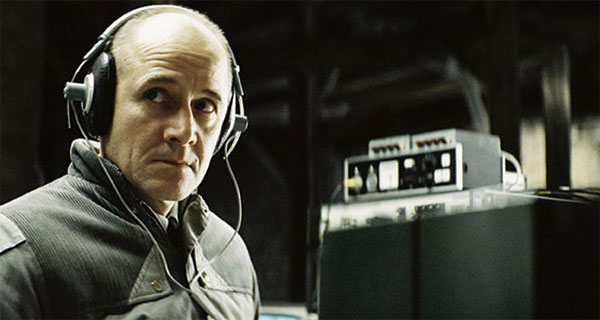
 The Lives of Others is a genuine pleasure to watch for both its design and execution. The storyline is tautly crafted, providing a perpetual air of tension surrounding the people living under the malevolent, Big Brother-like gaze of the Stasi. Suspense is created not only through the main storyline surrounding Dreyman and whether he will be caught, but also a number of other subplots that act as seperately burning fuses, hinting at potential disaster at any moment. Matching the film's superb structure are its fascinating characters, all impressively acted. Sebastian Koch is suitably excellent as Dreyman, the artist struggling to maintain both his safety and a clean conscience, and Martina Gedeck does a fine job portraying the complex Christa-Maria. Ulrich Tukur makes a strong impression as a friend and superior to Weisler (especially in the tense scene that takes place in the cafeteria), but if there is any one actor to admire the most in the film, it would have to be Ulrich Mühe as Weisler himself. Ultimately, the film is telling his story, being that of someone who is at first a cold-hearted bloodhound for the Stasi, then experiences an awakening of sorts, gradually realizing the harm and consequences of his actions and doing his best to make compensation. Sadly, Mühe passed away from cancer in July of 2007, but The Lives of Others stands as a tribute to his remarkable talent - particularly in the film's eerily fitting final freeze-framed shot.


 Posts
All Comments
Posts
All Comments


