
Hello all. I just wanted to share the release of a brand new trailer for the 2010 short film Exhalation, which was directed by Malaysian filmmaker Edmund Yeo. I've followed Edmund's remarkable progress for some time now and written about a number of his admirably crafted films, including Exhalation, The White Flower and Kingyo.
If you're in or around Tokyo in late October, you can catch it at the 24th Tokyo International Film Festival on the 23rd along with Lim Kah Wai's Magic and Loss. Check here for more information on the screening.
Plus, you can check out a short interview I did with Edmund about Exhalation over at the J-Film Pow-Wow.
Saturday, September 24, 2011

Sunday, August 28, 2011
Three Reasons for Satyajit Ray's The Music Room
A few nights ago, I finally got around to watching this incredible film from the great Bengali master Satyajit Ray. This vid (part of Criterion's brilliant Three Reasons ad line) does a pretty good job of illustrating some of its highlights. Actually, it's one of the more dynamic videos in the series - due in no small part to both cinematographer Subrata Mitra's dynamic, Scorsese-esque (to me, at least) camera movements and the incredible, exhilarating music edited to the images. Check it out for yourself:
Saturday, August 27, 2011
Book Stuff!
Hello all. Marc here with a quick post regarding two film book-related tidbits for you. Firstly, John Berra, editor of such books as Directory of World Cinema: Japan and Directory of World Cinema: American Independent and current lecturer of film studies at China's Nanjing University, has recently released the cover image (see below) for the upcoming Directory of World Cinema: Japan 2, which he also edited. The new book will, like the first, feature reviews and essays covering various subjects in the world of Japanese cinema. Contributors include myself as well as fellow J-Film Pow-Wow writers Chris MaGee, Matthew Hardstaff and Bob Turnbull. Using an image from Tetsuya Nakashima's film Kamikaze Girls, it looks like the folks at Intellect behind the design decided to really run with the pink motif! The book will be released sometime in 2012.

Speaking of film books, there's a site that I've been meaning to plug here for some time now that covers in remarkable detail the goings on in the world of film writing. It is Toronto Film Review, run by fellow Toronto cinephile and film literature devotee David Davidson. Over at his blog, you'll find monthly editorials, book reviews, news and write-ups on film-related goings-on in Toronto and more. The easily detectable passion and incredible depth of David's pieces alone make his site worth visiting - check it out!

Speaking of film books, there's a site that I've been meaning to plug here for some time now that covers in remarkable detail the goings on in the world of film writing. It is Toronto Film Review, run by fellow Toronto cinephile and film literature devotee David Davidson. Over at his blog, you'll find monthly editorials, book reviews, news and write-ups on film-related goings-on in Toronto and more. The easily detectable passion and incredible depth of David's pieces alone make his site worth visiting - check it out!
Sunday, August 21, 2011
Late Summer Update - Shinsedai! Kiki Sugino! Federico Fellini! Satyajit Ray! Tokyo!
Hello all! After having recently spent a relaxing stint in northern Ontario cottage country and, before then, kept fairly busy with various writing projects here and there, I have quite a bit to report regarding my goings-on in the film community! Let's dive right in, shall we?

* At the end of July, the 3rd Shinsedai Cinema Festival came and went through Toronto, bringing with it a slew of great independent Japanese films, including Fumie Nishikawa's The Azemichi Road, which won the festival's Kobayashi Audience Choice Award; Koji Fukada's Hospitalité; Keita Kurosaka's Midori-ko; Ryugo Nakamura's The Catcher on the Shore and Neil Cantwell and Tim Grabham's KanZeOn. You can read a brief overview of the festival I wrote for the J-Film Pow-Wow; in addition to that, I'll have a more in-depth report posted at Midnight Eye sometime in the future.

* During the festival, I had the opportunity to interview a special guest - Kiki Sugino, who has served as an actor and producer on Hospitalité, which was the festival's opening night film; Edmund Yeo's short film Exhalation and Kah-Wai Lim's Magic and Loss. In the time I was allotted, we covered a good portion of topics regarding her career, collaborations with various directors and cultural background. Read the full interview over at the VCinema Blog!

* Meanwhile, over at Toronto Film Scene, I'm continuing my little series of pieces on the TIFF Bell Lightbox's Fellini/Felliniesque: "Dream" Double Bills film program that has been going on over the summer, tying in with its Fellini: Spectacular Obsessions exhibition. Earlier, I had written on Miranda July's pairing of Fellini's La Strada with Jane Campion's An Angel at my Table, while most recently I've submitted a piece on Deepa Mehta's selection of Nights of Cabiria with Satyajit Ray's Devi. Expect at least one more to land on the site before this fascinating program is up - and while you're at it, go check out some of these films or the ones in the Lightbox's thematically linked Days of Glory: Masterworks of Italian Neorealism program.

* Finally for now, a few days ago marked the release of a new book from Intellect that I contributed to: World Film Locations: Tokyo, which looks at some notable sites and sights throughout the city that have popped up on movie screens in productions both Japanese and otherwise. It was edited by my buddy at the J-Film Pow-Wow, Chris MaGee, and features pieces from a whole slew of writers and film folk who I'm very lucky to count among my friends and acquaintances. They consist of *deep breath* the Pow-Wow's own Matthew Hardstaff and Eric Evans, Nishikata Film Review's Catherine Munroe Hotes, VCinema's Jon Jung, Midnight Eye's Tom Mes, Directory of World Cinema: Japan editor John Berra and Japanese Canadian Cultural Centre Executive Director James Heron, among many more talented contributors. If you're interested in picking up the book, you can follow this link to Amazon.ca or check any convenient online retailer or hip bookstore near you!
UPDATE (28/08/2011): It seems that the book's release has been slightly delayed by one month - thus, it will be out on Sept. 15th.

* At the end of July, the 3rd Shinsedai Cinema Festival came and went through Toronto, bringing with it a slew of great independent Japanese films, including Fumie Nishikawa's The Azemichi Road, which won the festival's Kobayashi Audience Choice Award; Koji Fukada's Hospitalité; Keita Kurosaka's Midori-ko; Ryugo Nakamura's The Catcher on the Shore and Neil Cantwell and Tim Grabham's KanZeOn. You can read a brief overview of the festival I wrote for the J-Film Pow-Wow; in addition to that, I'll have a more in-depth report posted at Midnight Eye sometime in the future.

* During the festival, I had the opportunity to interview a special guest - Kiki Sugino, who has served as an actor and producer on Hospitalité, which was the festival's opening night film; Edmund Yeo's short film Exhalation and Kah-Wai Lim's Magic and Loss. In the time I was allotted, we covered a good portion of topics regarding her career, collaborations with various directors and cultural background. Read the full interview over at the VCinema Blog!

* Meanwhile, over at Toronto Film Scene, I'm continuing my little series of pieces on the TIFF Bell Lightbox's Fellini/Felliniesque: "Dream" Double Bills film program that has been going on over the summer, tying in with its Fellini: Spectacular Obsessions exhibition. Earlier, I had written on Miranda July's pairing of Fellini's La Strada with Jane Campion's An Angel at my Table, while most recently I've submitted a piece on Deepa Mehta's selection of Nights of Cabiria with Satyajit Ray's Devi. Expect at least one more to land on the site before this fascinating program is up - and while you're at it, go check out some of these films or the ones in the Lightbox's thematically linked Days of Glory: Masterworks of Italian Neorealism program.

* Finally for now, a few days ago marked the release of a new book from Intellect that I contributed to: World Film Locations: Tokyo, which looks at some notable sites and sights throughout the city that have popped up on movie screens in productions both Japanese and otherwise. It was edited by my buddy at the J-Film Pow-Wow, Chris MaGee, and features pieces from a whole slew of writers and film folk who I'm very lucky to count among my friends and acquaintances. They consist of *deep breath* the Pow-Wow's own Matthew Hardstaff and Eric Evans, Nishikata Film Review's Catherine Munroe Hotes, VCinema's Jon Jung, Midnight Eye's Tom Mes, Directory of World Cinema: Japan editor John Berra and Japanese Canadian Cultural Centre Executive Director James Heron, among many more talented contributors. If you're interested in picking up the book, you can follow this link to Amazon.ca or check any convenient online retailer or hip bookstore near you!
UPDATE (28/08/2011): It seems that the book's release has been slightly delayed by one month - thus, it will be out on Sept. 15th.
Wednesday, July 20, 2011
The 3rd Shinsedai Cinema Festival Comes to Toronto!

Now entering its third year, the Shinsedai Cinema Festival will once more be bringing a slew of independent Japanese films to Toronto this summer. Began in 2009 by author and Midnight Eye co-founder Jasper Sharp and J-Film Pow-Wow founder and editor-in-chief Chris MaGee, the festival is designed to highlight some of the newest filmmakers to emerge from Japan, giving North American viewers a rare chance to take a look at noteworthy films that have received attention elsewhere in the world. This year’s guests will include Kiki Sugino, the lead actress and producer of the opening night film, Koji Fukuda’s Hospitalité; comedian and director Devi Kobayashi, whose films Mariko Rose the Spook and Hikari will be shown back-to-back; and Ryugo Nakamura, a fifteen year-old filmmaker who already has an impressive number of short films (thirty, to be precise) to his name and will be presenting his latest feature, The Catcher on the Shore.
This year’s lineup looks like quite the diverse grab bag of cinematic treats, offering a wide selections of genres to choose from. Along with the above-mentioned films, I am quite intrigued by a few films I recognize from this year’s lineup from Frankfurt’s Nippon Connection film festival, which I had the pleasure of attending. Besides highlights like Koji Shiraishi’s Shirome, a mockumentary that features girl group Momoiro Clover thrust into a horror film scenario, and Yoichi Higashi’s Wandering Home, a family drama starring Tadanobu Asano as the alcoholic photojournalist Yutaka Kamoshida, I am perhaps most excited about Keita Kurosaka’s Midori-ko, a positively brilliant, beautifully strange work of hand-drawn animation that took its maker over ten years to complete.
The 3rd Shinsedai Cinema Festival will run from July 21st-24th, 2011, at the Japanese Canadian Cultural Centre in Toronto. Full details on the films, schedule, tickets and passes and location can all be found at the festival’s main website. I will be doing some coverage of the festival for a few film sites, so stay tuned for links to those pieces once they are completed!
Check out the trailers for Hospitalité and Midori-ko below!
Sunday, July 10, 2011
Images of a Tarkovskian Nature
Hello, all. So, lately I've been going through something of an Andrei Tarkovsky phase, which I've fuelled by reading a fair bit about him, revisiting certain films of his and discovering others for the first time (including his final masterpiece, The Sacrifice). I've also been greatly appreciating a Tumblr blog run by the Criterion Cast's Ryan Gallagher that provides continuous postings of Polaroid pictures Tarkovsky took throughout his life - it should come as no surprise that each one offers up an image of beauty.
So, to make my own image-based tribute to this beloved master of cinema, I thought it'd be fitting to share a few pictures I've taken during my recent travels that strongly evoke his films and their unique, powerful connection to nature.
So, without further ado, here are some Tarkovskian images for you to enjoy that will hopefully put you in the mood to revisit one of his beautiful films.
The following pictures (which you can click to enlarge) were taken in different corners of Canada, in Victoria, British Columbia...


So, to make my own image-based tribute to this beloved master of cinema, I thought it'd be fitting to share a few pictures I've taken during my recent travels that strongly evoke his films and their unique, powerful connection to nature.
So, without further ado, here are some Tarkovskian images for you to enjoy that will hopefully put you in the mood to revisit one of his beautiful films.
The following pictures (which you can click to enlarge) were taken in different corners of Canada, in Victoria, British Columbia...


...Minden, Ontario...


...and Oakville, Ontario.


Friday, July 1, 2011
Fellini Fever Hits Toronto: the TIFF Bell Lightbox's Fellini: Spectacular Obsessions Exhibition

Having been through the exhibit, I can safely say that it is extremely worthwhile, both for the creative way in which all the pieces are presented within the space as well as all of the fascinating topics within Italy's artistic culture that are explored. Along with the exhibit, the Lightbox will be running two great film programs throughout the summer: Days of Glory: Masterworks of Italian Neorealism, featuring key films by De Sica, Rossellini, Pasolini and others; and Fellini/Felliniesque: "Dream" Double Bills, which consists of interesting pairings of Fellini films with some by other directors.
Click on the following links to check out my Toronto Film Scene piece on the exhibition and all the cool stuff it has to offer and further details on the exhibit and film programs on the TIFF website.
Oh yes, and happy Canada Day.

Monday, June 27, 2011
My Festival Report for Nippon Connection 2011 Now Available at Senses of Cinema

Hello, all. A little earlier, I mentioned my recent return to Frankfurt, Germany, for the 11th Nippon Connection film festival, which focuses exclusively on Japanese cinema. Along with writing about specific films for the Toronto J-Film Pow-Wow, I also produced a festival report that has now been published by Senses of Cinema in their 59th issue. You can go check it out here!
Saturday, June 25, 2011
Exploring Kieslowski's Three Colors Trilogy: Red (1994)
Director: Krzysztof Kieslowski
Country: France/Poland/Switzerland

As I mentioned in my previous review of Krzysztof Kieslowski’s Blue, the films that make up his Three Colors trilogy can be considered as responses to specific genres. While Blue is said to be an anti-tragedy and White an anti-comedy, Red is the anti-romance – and, I believe, the film that best fulfills its designation. It certainly addresses love, but does so in a curious, indirect way, circling questions and elements of romance without ever delivering the full emotional payoff one might expect. One of the film’s relationships, between a young man named Auguste (Jean-Pierre Lorit) who is studying to become a judge and his blonde girlfriend Karin (Frédérique Feder), is only presented in short, fleeting scenes mainly focused on him. Another is stretched thin across Europe, tying together Geneva-based model Valentine (the enchanting Irène Jacob) and Michel, a university student living in London, through increasingly fraught phone conversations. It feels like Kieslowski uses these two storylines to examine contemporary relationships – or, rather, how certain relationships were never meant to work.
But then, nestled between these ones, there is another that oddly does. This relationship is between Valentine and a retired judge marvelously portrayed by Jean-Louis Trintignant. One night, she hits a German Shepherd with her car and, after carrying the hurt animal to her backseat, brings her to the address written on her collar. At the house, Valentine has her first encounter with the judge, who reacts to her confession of the incident with indifference and lets her keep the dog. She leaves, but they will continue to meet throughout the film, usually at his home. She learns that he spends much of his time eavesdropping on his neighbors’ phone calls using a special machine, observing their lives but never interfering. Valentine disapproves, yet she doesn’t betray his secret nor sever her contact with him. Instead, through their conversations they gradually learn more about one another and the circumstances that have shaped their lives.
This odd friendship makes up the core of Red and is never anything less than fascinating thanks to Jacob and Trintignant’s nuanced performances. Even though their characters have their share of differences (not least of all in age), they nonetheless discover and build a connection between themselves based upon curiosity, recognition and respect. This is where the much-noted theme of fraternity comes into the film: both Valentine and the judge are noticeably estranged from the people in their respective lives, thus identifying with one another as fellow outsiders and kindred spirits. There is a sense of closeness and trust in their shared words and gestures that come across as more sincere and believable than a great many full-blown love affairs one is likely to see onscreen.

Throughout Red, Kieslowski conducts a subtle study of actions and reactions, exploring how chance occurrences can have significant, far-reaching consequences. There are many such causal agents put forth, ranging from a book that falls open at just the right page to a malfunctioning car radio to the convergence of a number of strangers at a court hearing. Here more than anywhere else, the line between chance and fate is blurred by intriguing details put forth by Kieslowski – most significant of which being the uncanny resemblance between events from the judge’s past and ones playing out in the present in Auguste’s life, as if the latter character were a younger mirror version of the former. Another echo is presented in the form of the old lady who struggles to put an empty bottle in a recycling bin – an image included in all of the Three Colors films. The threads of interconnectivity are more deeply woven simply by the several occasions in which Valentine and Auguste cross paths without ever actually meeting, among other similar cases of different characters’ lives overlapping and touching one another. These dovetailing, beautifully orchestrated cases of coincidence, repetition and linkage make Red seem like a more patient, mature take on Magnolia; a film that is quite comfortable with the understated manner in which it presents its deep, potentially mind-blowing ideas. The true payoff arrives in the final scene, which will really get you pondering the crazy pinball patterns your own life can take based on seemingly small events and decisions – an effect made all the more rewarding if you watch the trilogy in order.
These last few words should be devoted to the stylistic features that make Red such a pleasure to take in. With his score, Zbigniew Preisner seems to return to the majesty of Blue, but with a more subdued, ethereal approach. Regarding the cinematography, production design and set decoration, Kieslowski and his creative team have really outdone themselves in making the most of their central color. Thankfully, the use of red here isn’t overwhelming – it doesn’t flood the screen, but is instead represented by several perfectly selected objects, pieces of clothing and features of the environments. Among the most surprising aspects of the film is the pure energy of the visual style, which often reaches thrilling heights. Fast, swooping crane shots; a speeding red bowling ball’s course down a lane; the opening, kaleidoscopic depiction of a long-distance phone call that pulls you head-first into the film – such moments and more all substantially add to the experience Red provides and demonstrate the generous, inventive spirit of its key engineer, Kieslowski, in spades.
In and of itself, the film is a wonderful achievement. As the third part of the Three Colors trilogy, it is the perfect finishing chapter to a film series that will only continue to enthrall viewers with its considerable scope, intricacy and empathy.
Also posted at Row Three.
Monday, June 20, 2011
My Guest Spot on the VCinema Podcast Discussion of Hou Hsiao-Hsien's Café Lumière
Hello all. Not too long ago, I made an appearance on the VCinema Podcast, which specializes in Asian cinema, to discuss Edward Yang's masterpiece, Yi Yi (2000). That episode, available here, was the first of three planned ones in which I'll be talking with hosts Coffin Jon, Josh and Rufus about Taiwanese cinema and some of its most esteemed directors - namely Yang, Hou Hsiao-Hsien and Tsai Ming-Liang. And now...the second episode is now available! This time around, we tackle the Japan-based Ozu tribute-of-sorts Café Lumière (2003). All in all, I think we wound up having a pretty good discussion that touches upon a number of interesting topics. To listen for yourself, click on the icon below to access the show, be it through iTunes or manual download. Thank you for listening and enjoy!

Friday, June 17, 2011
Exploring Kieslowski's Three Colors Trilogy: White (1994)
Director: Krzysztof Kieslowski
Country: France/Poland/Switzerland

Sandwiched between the opulent Blue and the more elusive Red, White suffers to a degree from the “middle film syndrome” found so often in film trilogies. There are numerous possible reasons behind this specific case: it is a comedy (of sorts) amid two more deeply serious films, its titular hue doesn’t promise as much visual splendor as blue or red does, and it possesses a more surprising and quirky quality than what one might initially expect before viewing it. That final point partially stems from certain promotional images for the film focusing mainly on actress Julie Delpy. It makes sense in the context of Krzysztof Kieslowski’s Three Colors trilogy and the marketing for it as a whole: three colors, three films, three lovely leading ladies (with Delpy joined by Juliette Binoche and Irène Jacob).
But as ideal as Julie may be as the face of White, it isn’t her film. Her character, Dominique, is important to the story, but she only appears for a small fraction of its screen time. Instead, the film’s real hero (or anti-hero) is Karol Karol, portrayed by the superb Zbigniew Zamachowski. We first see the Polish immigrant making his way to a Paris courthouse to the divorce hearing where Dominique, his soon-to-be-ex-wife, plainly states her intent to leave him due to his inability to consummate their marriage. From there, Karol’s luck very rapidly slips away from him: shut out of his home, he seeks shelter for the night at the beauty salon he formerly co-owned with Dominique. In the morning, she confronts him and, after one last chance for reconciliation passes by, cruelly kicks him out and threatens to bring the police down upon him. Poor Karol retreats to the Paris Métro where he plays a comical, kazoo-like instrument fashioned out of a comb for change. It is there where he meets a fellow Pole named Mikolaj (Janusz Gajos) with whom he quickly forms a bond of friendship and hatches a plan to transport himself back to Warsaw in a trunk. Despite an unplanned, uncomfortable detour, Karol triumphantly arrives back in his home country, reunites himself with his brother and finds work and a home in his hair salon. From there, Karol devotes himself almost single-mindedly to gaining money and power for himself, working with Mikolaj to form a campaign of revenge against Dominique.

As the above synopsis indicates, White is very much a narrative-driven film – certainly more so than Blue and Red. This can mainly be allotted to the twisty, constantly evolving nature of Karol’s trajectory. In this respect, the film could be compared to Stanley Kubrick’s Barry Lyndon or any other story in which the hero hoists him or herself out of dire straits using luck, pluck and ambition – these kinds of tales by design usually turn out to be incredibly engrossing, if only because of pure curiosity about where the character will end up next. Plus, it certainly helps when the central character is as fascinating to watch as Karol is. Somewhat resembling Tim Robbins, Zamachowski does a great job of portraying a highly sympathetic character who does not always do sympathetic things. Karol seems to scrape by with a built-in survival instinct, and carries himself with an odd mixture of meekness, shamelessness and charm even when placed in some particularly troubling predicaments. Just as interesting is his relationship with Dominique, the woman he continues to love even after she purposely torments him, even as he goes about preparing his plan against her.
Thus, Kieslowski presents us with a tragicomedy in the purest sense, masterfully balancing humorous moments with serious ones. Composer Zbigniew Preisner departs from the symphonic heights of Blue’s score to provide music that is noticeably lighter and springier, propelling us through Karol’s journey with an upbeat energy. Along the way, there are numerous scenes that openly invite serious considerations of love, life and happiness. If nothing else, White serves as possibly the most outright entertaining entry in the Three Colors trilogy; a fun yet thoughtful yarn that ably continues Kieslowski’s exploration of morality and human connection.
Also posted at Row Three.
Thursday, June 9, 2011
Exploring Kieslowski's Three Colors Trilogy: Blue (1993)
Director: Krzysztof Kieslowski
Country: France/Poland/Switzerland

Until recently, Krzysztof Kieslowski remained one of my biggest blind spots in the gallery of world cinema’s quintessential auteurs. One of those figures who continually lingered in my peripheral vision, the Polish filmmaker bears a reputation that ranks him among the likes of Bergman and Tarkovsky, Almodóvar and Haneke. But besides his prominence in the European arthouse scene, I was intrigued by the nature of his films – deep, mesmerizingly shot considerations of chance, fate and humanity. It wasn’t until after I read Roger Ebert's Great Movies essay on Kieslowski's Three Colors trilogy that I learned of the warmth and empathy he was capable of. Basically, he seemed like someone whose perspective I could readily appreciate and even grow fond of, and thus my appetite was properly whetted.
So I took it upon myself to pick up the trilogy and watch it over the course of a few nights. Consisting of Blue (1993), White (1994) and Red (1994), they mark the end of Kieslowski’s directorial career. Shortly after completing Red, he announced his retirement from cinema. Sadly, approximately two years later, he passed away when he had a heart attack during an open-heart surgery operation in March of 1996. Yet he left behind an impressive body of work that concludes with a final run of films that any filmmaker would be proud to go out with.
Here, in order, I will provide my initial impressions of the Three Colors. While the films freely invite different interpretations, they are inspired by the colors that make up the flag of France and their corresponding themes: liberty (blue), equality (white) and fraternity (red). The films have also been referred to as, respectively, an anti-tragedy (Blue), an anti-comedy (White) and an anti-romance (Red). But as the films and various writings on them reveal, these themes aren’t rigidly applied or represented in any way, but rather subtly explored and touched upon through the characters’ experiences and Kieslowski’s playful, mysterious approach to them. The result is a fascinating, refreshingly open cinematic arena for interpretations and ideas that I imagine will vary for each viewer. For what they’re worth, here are some of mine.
* * *
Long before I finally made my way to the Three Colors trilogy, I was aware of Blue’s status as an easy favorite among viewers. Out of the three films, it has earned possibly the most attention and can regularly be found at the top of most people’s personal rankings. This can easily be attributed to the many stand-out draw factors contained in the film: Juliette Binoche’s excellent lead performance, Slawomir Idziak’s sumptuous cinematography, Zbigniew Preisner’s grand score. Putting aside Binoche for a moment, Blue is indeed a film very much defined by its bold strokes of outright style. The opening sequence indicates as much in its visually and sonically intense depiction of a car ride, confronting the viewer with an up-close tire speeding over pavement, a distorted mosaic of lights as seen through a window, the roar of traffic engulfing the vehicle. The rest of the film comes laden with other beautifully executed flourishes, including the hazy, first-person perspective of Binoche’s recovery process following the car accident that kills her composer husband and their child; the odd flashes of blue light that appear at certain moments and the bursts of music that emanate, almost magically, from score pages.
Then, in the centre of it all, there is Binoche, giving what must be one of her most accomplished performances in her illustrious career. As Julie Vignon, sole survivor of the aforementioned crash, she steers her way through the difficult terrain of grief and depression. She first returns to her rural house, then moves into a Paris apartment, all the while carrying herself with a strong-willed and even reckless independence. Whether ridding herself of her family’s former possessions (including the home where they lived together), quietly contemplating the other characters around her or ending conversations with jarring abruptness, she constantly possesses an air of self-imposed distance from the world around her. She is dead-set on handling her own emotions and dealing with the lingering ties to her previous life on her own, and we as viewers are never quite sure which action she will take next. The result is not only a fantastic performance, but also a wonderfully complex and unpredictable character arc brimming with possibilities.

Much of that sense of narrative freedom comes from a large selection of supporting characters who interact with Julie through an almost episodic structure. Her husband’s friend and musical colleague, the young man who found her shortly after the crash, her spirited neighbor who works as a stripper, her husband’s mistress – they and more all occupy different areas of Julie’s life whilst facing their own dilemmas and experiences. That is one of Kieslowski and co-writer Krzysztof Piesiewicz’s great gifts here and in the other two films: a completeness to the characters and their lives that extends far beyond the provided screen time. Throughout the trilogy, this quality is made clear in some particularly marvelous ways, but it comes through in Blue most notably in a stirring sequence near the end that will make you seriously wonder if Richard Kelly didn’t do a bit of shoplifting for an uncannily similar moment in Donnie Darko.
Blue is so cinematically rich that it can be a bit staggering to remember that Kieslowski followed it up with two more works. The film by itself is a clear masterpiece, possessing such artistry and depth that one could be perfectly content to revisit, savor and contemplate it for some time before even thinking of moving on to White. Along with the great acting and style, the world of intertwining stories and emotional trials Blue delves into gives viewers lots to think about in relation to their own lives, along the way presenting Kieslowski as an intriguing, one-of-a-kind philosopher whose lessons he preferred to illustrate through cinema.
Also posted at Row Three.
Monday, May 16, 2011
Frankfurt: Spring 2011
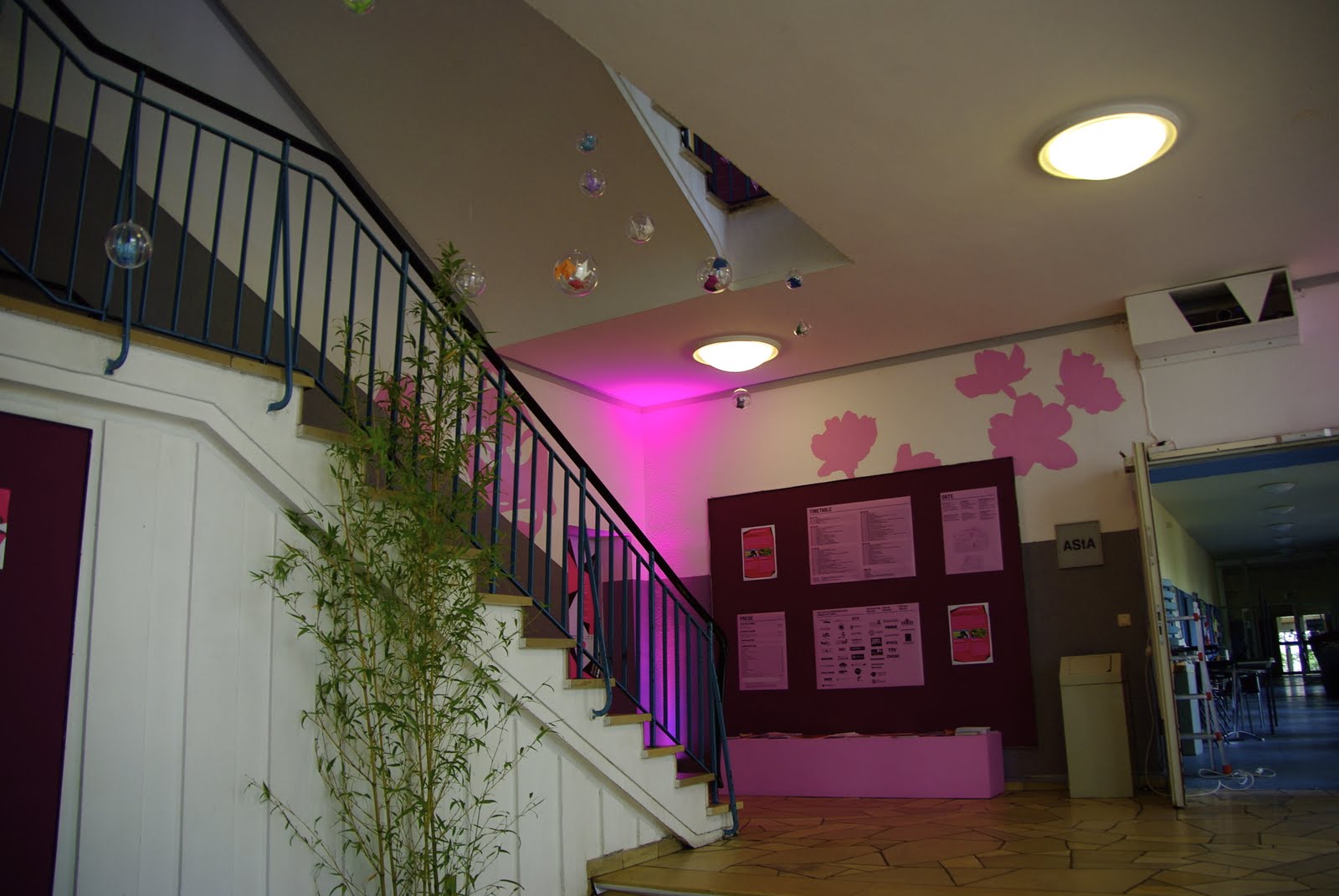
A few weeks ago, I returned from my second trip to Frankfurt for this year's Nippon Connection film festival, which ran from April 27th to May 5th. With great weather, wonderful people and interesting films, I certainly had an awesome time. To read the coverage that my buddy Chris MaGee and I wrote up on the fest and specific films, head over to the Toronto J-Film Pow-Wow.


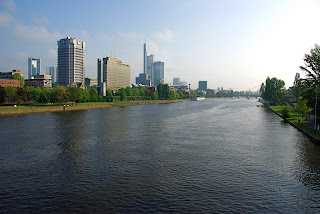


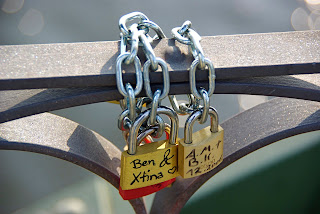





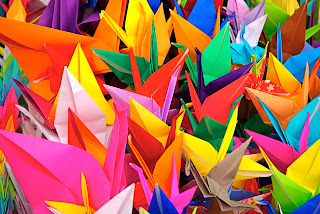


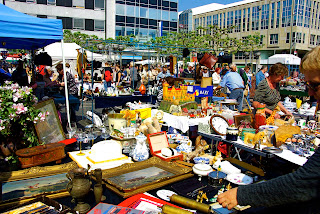


You can also scroll below to check out some of the pictures I snapped throughout that week:







Subscribe to:
Posts (Atom)


 Posts
Posts


