
Country: India
It's only fitting that I follow up Slumdog Millionaire with a genuine Bollywood flick. This particular one was made fairly recently and gained much acclaim, most notably an Oscar nomination for Best Foreign Film and worldwide popularity. I chose to seek it out in the middle of a gloomy Canadian winter with hopes of raising my snow-bound spirits, and boy, did it do the trick. True to the ambitions of many a Bollywood picture, Lagaan is hugely entertaining on multiple levels.
The film is set in 1893, when the British still had a colonial presence in India. Its title refers to a grain tax that villages must pay towards the English. In the midst of a draught, a small village's prospects grow considerably darker after the arrogant Captain Andrew Russell (a villain perfectly designed to draw all manners of boos and hisses from the audience) doubles the Lagaan for seemingly no other reason than sheer malice towards the native population. Enter Bhuvan, a spirited young man (played by star Aamir Khan, who also produced the film) who takes up a challenge against the sneering officer for his people's good: a cricket match which, if won by the village, will excuse the entire province from Lagaan for three years; but if the British win, the Lagaan will be tripled.
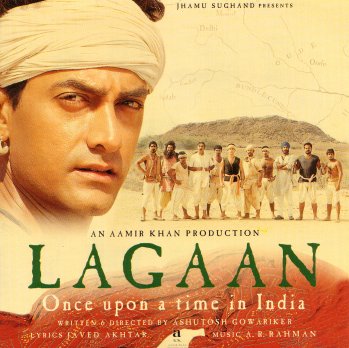
I was delighted to notice that this film bears many similarities with another Asian epic: Seven Samurai. As in that film, a village facing a threat from forces of oppression must gather together a team of heroes in a short period of time to prepare, practice and mount a defensive force. Granted, Lagaan is set in India, centers around a cricket match rather than actual combat and throws in all sorts of extra ingredients like colonial politics and enthralling musical numbers, but nonetheless, the resemblances are there. As in Kurosawa's film, the story's structure allows plenty of time to be devoted to the numerous characters both within and outside the village as each side prepares themselves and the cricket match looms closer and closer. Plenty of subplots crop up, most prominent among them a love triangle between Bhuvan, Gauri (Gracy Singh), a village girl who harbors strong feelings for him, and Elizabeth (Rachel Shelley), the Captain's sister who decides to help the Indian team.
Lagaan could accurately be described as more focused and straight-forward than most other Bollywood epics. By sticking to the villagers' plight and their opposition to the colonial forces' tyranny, it maintains a fairly consistent tone and doesn't go overboard with too many outlandish elements. That said, it still contains its share of song and dance sequences, which I greatly enjoyed. The music was provided by none other than A.R. Rahman, who also composed the score for Slumdog Millionaire and is nominated for three Oscars for his work on that film (for Best Original Score and the songs "Jai Ho" and "O Saya"). Each song provided a nice break from the narrative flow while amplifying the characters' emotions at various points with hugely entertaining vivacity (though maybe it wasn't such a good idea to have Elizabeth join in for one song with her own, comparatively bland Western musical style).

Even though it clocks in at 3 hours and 45 minutes, Lagaan moves its story along at a steady pace, and not one minute of it felt wasted. This is probably as good a "crossover" flick into the vast realm of Bollywood cinema as you're likely to find, giving a good taste of authentic Indian screen entertainment in a highly accessible form. It certainly worked for me, and I'm looking forward to seeking out more of the delights that Bollywood has to offer. For those of you out there who are looking for something to tide you over until Slumdog comes out on DVD (or, at least, sweeps the Oscars, which I'm hoping it does), why not give this a try?


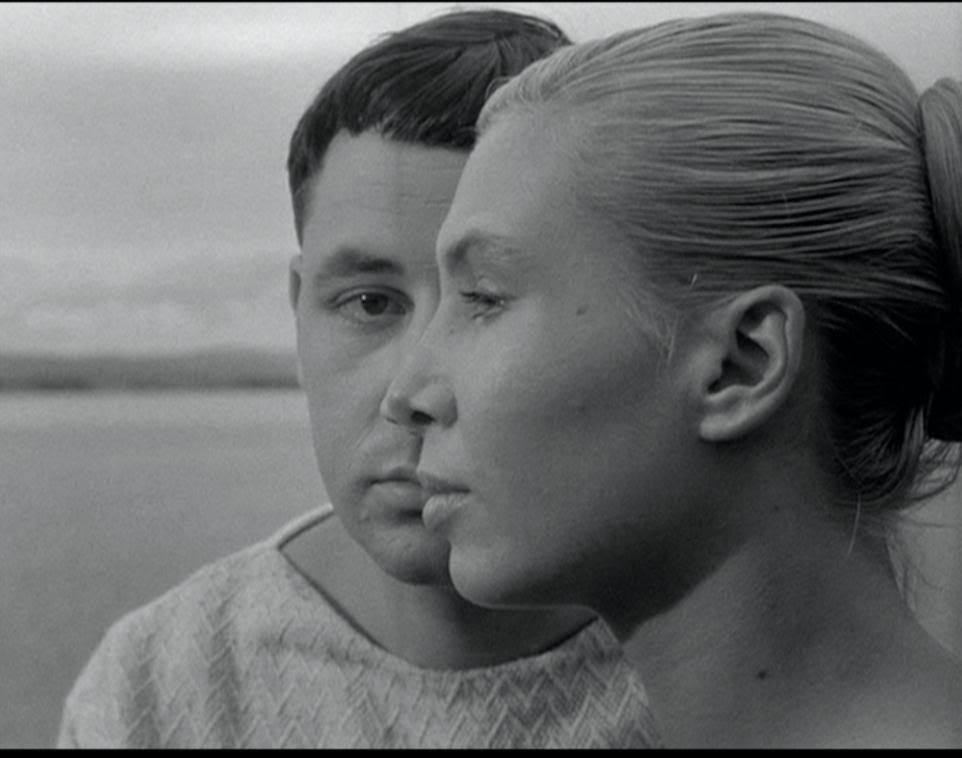



 This year, Varda will be visiting the Toronto International Film Festival to present her new documentary,
  This film is very much exemplary of the kind of work Fellini produced in the later half of his career. While these films were filled with eye-popping visual compositions and massive amounts of imagination, they just didn't have the same sense of emotional involvement or intimacy that his earlier films did. As Satyajit Ray once explained (paraphrased here), this late-career Fellini was still very admirable and inspirational, but only as a cinematic technician.

 The movie is extremely simplistic in design and tells its story at its own steady pace - not unlike Schultze himself. The film's main strength lies in all the little details of character and everyday life that lie scattered throughout its frames, just waiting for the viewer to pick up on. It's not out to shove a great, lofty message down people's throats; it just follows Schultze on his travels (eventually finding him navigating through the waters of Louisiana) and invites you to come along. As with all proper adventures, he meets a wide variety of people and learns more about himself as a person than he ever would have back in his home town.

 Of course, a major part of what makes this epic film so, well, epic, is the stunning cinematography by F. A. Young. Besides being devastatingly beautiful, the majestic desert settings are presented as monumental, ultimately indifferent forces of nature where men and camels are shrunk to the size of fleas and death is often (but not always) as simple as a camel suddenly missing its rider.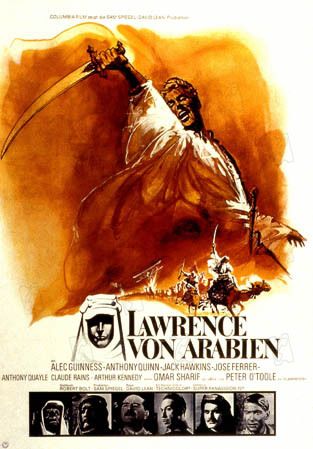
 A chilling sense of paranoia runs through the entire film. Nothing is straight-up explained right away, and the viewer has to gradually piece together what Otilia and Gabita are up to and why they are so nervous doing it. Even little things such as negotiations with hotel clerks and Otilia's promise to come to her boyfriend's mother's birthday celebration (a well-played sub-plot) are rendered as troublesome obstacles in the way of the women's plan. The final touch being the drab, gray world of stark streets and shadowy alleyways (particularly terrifying in the final moments of the film), 4 Months is positively Nineteen Eighty-Four-ish, and this Ceausescu-era Romania could just as easily be Winston Smith's Oceania, with agents of Big Brother lurking around every corner.


 Posts
Posts


